

.png)

.png)


Accessibility Tools
Os Seminários PESC têm como objetivo trazer palestras acessíveis a um público mais amplo, ministradas por pesquisadores e professores mais experientes (tanto do PESC como de instituições externas). Ao longo do ano, teremos temas e focos variados, podendo ser mais específicos ou mais abrangentes.
A apresentação e discussão de ideias novas e antigas de diferentes temas contribui de maneira fundamental para a formação e pesquisa desenvolvida por alunos e professores, sendo muitas vezes de interesse de um público mais amplo.
Os Seminários que são on-line ou híbridos ficam gravados no Canal do PESC no YouTube, que apresenta muitas outras gravações importantes sobre o que acontece no PESC.
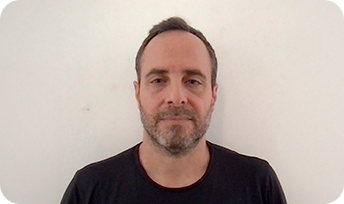 Scientific Machine Learning and Quantum Utility: A Near Future Perspective
D.SC. Alberto Costa Nogueira Junior (IBM Research)
Lattes aqui
Dia 03/12 (terça-feira), 12 horas, Sala H-324B
Transmissão ao vivo no Canal do PESC no YouTube clicando aqui
In 2021, Gartner Inc., a global leader in information technology research and advisory, identified Physics-Informed Machine Learning (PIML) as one of the most promising AI technologies for the next decade. PIML seamlessly integrates data with mathematical models, even in complex, uncertain, and high-dimensional contexts, utilizing neural networks or traditional regression techniques in a meshless and straightforward manner. This talk traces the evolution of PIML within IBM Research, beginning with our early experiments using Physics-Informed Neural Networks (PINNs) to address seismic wavefield problems. We will discuss both the strengths and limitations of PINNs and the challenges of applying them to real-world engineering and environmental issues. Next, we explore the development of Reduced Order Models (ROMs) for creating low-dimensional representations of high-fidelity systems, with applications to ocean and atmospheric circulation, pollution dispersion, and extreme sea surface height modeling. Finally, we will present a forward-looking perspective on extending the Non-Intrusive Operator Inference (OpInf) method into a hybrid quantum-classical algorithm. By leveraging its simple mathematical structure based on regularized ridge regression, we aim to harness quantum hardware speed-up for future advancements.
Short Bio:
Alberto Costa graduated in Mechanical Engineering from the State University of Campinas, Unicamp, in 1994. He participated in the exchange program for engineering students at the Institut National Des Sciences Appliquées de Lyon, France, from July 1992 to November 1993. He holds a Master's degree and a Ph.D. in Mechanical Engineering from Unicamp (1998 and 2002, respectively), He also concluded two post-doctorates in Computational Fluid Dynamics (CFD), one at the Faculty of Civil Engineering, Unicamp (2004), and the other at the Brazilian Aerospace Institute (IAE), DCTA (2006). For nearly a decade (2004-2013), Alberto led Thorus Scisoft Technology company and accumulated significant industrial and innovation experience as a technology entrepreneur. His areas of expertise cover many branches of Numerical Analysis, Computational Mechanics, and Scientific Machine Learning (SciML) such as High-order Discontinuous Galerkin Method (DGFEM), Spectral Element Method (SEM), Finite Element Method (FEM), Finite Volume Method (FVM), compressible and incompressible flows, turbulence modeling, chaotic dynamical systems, Physics-Informed Neural Networks (PINNs), Neural Operators (NO) and Reduced Order Models (ROMs). Since May 2013, he has held a position at the IBM Research Lab in Brazil as a research scientist. In May 2020, he took over leadership of the IBM SciML modeling team in developing state-of-the-art ROMs to tackle climate change. Alberto is the principal evangelist of the IBM-born open-source project SimulAI (https://github.com/IBM/simulai), a scientific toolkit designed to be a high-level collection of machine learning techniques for Physics-Informed applications. In 2024, he embarked on the Quantum Utility Era pioneered by IBM and adopted Quantum Scientific Machine Learning (QSciML) as his top-priority learning topic. One of his short to medium-term career goals is to "quantize" SimulAI's SciML features.
