.png)

.png)


Accessibility Tools
Os Seminários PESC têm como objetivo trazer palestras acessíveis a um público mais amplo, ministradas por pesquisadores e professores mais experientes (tanto do PESC como de instituições externas). Ao longo do ano, teremos temas e focos variados, podendo ser mais específicos ou mais abrangentes.
A apresentação e discussão de ideias novas e antigas de diferentes temas contribui de maneira fundamental para a formação e pesquisa desenvolvida por alunos e professores, sendo muitas vezes de interesse de um público mais amplo.
Os Seminários que são on-line ou híbridos ficam gravados no Canal do PESC no YouTube, que apresenta muitas outras gravações importantes sobre o que acontece no PESC.
 Blockchain 2.0: opportunities and risks
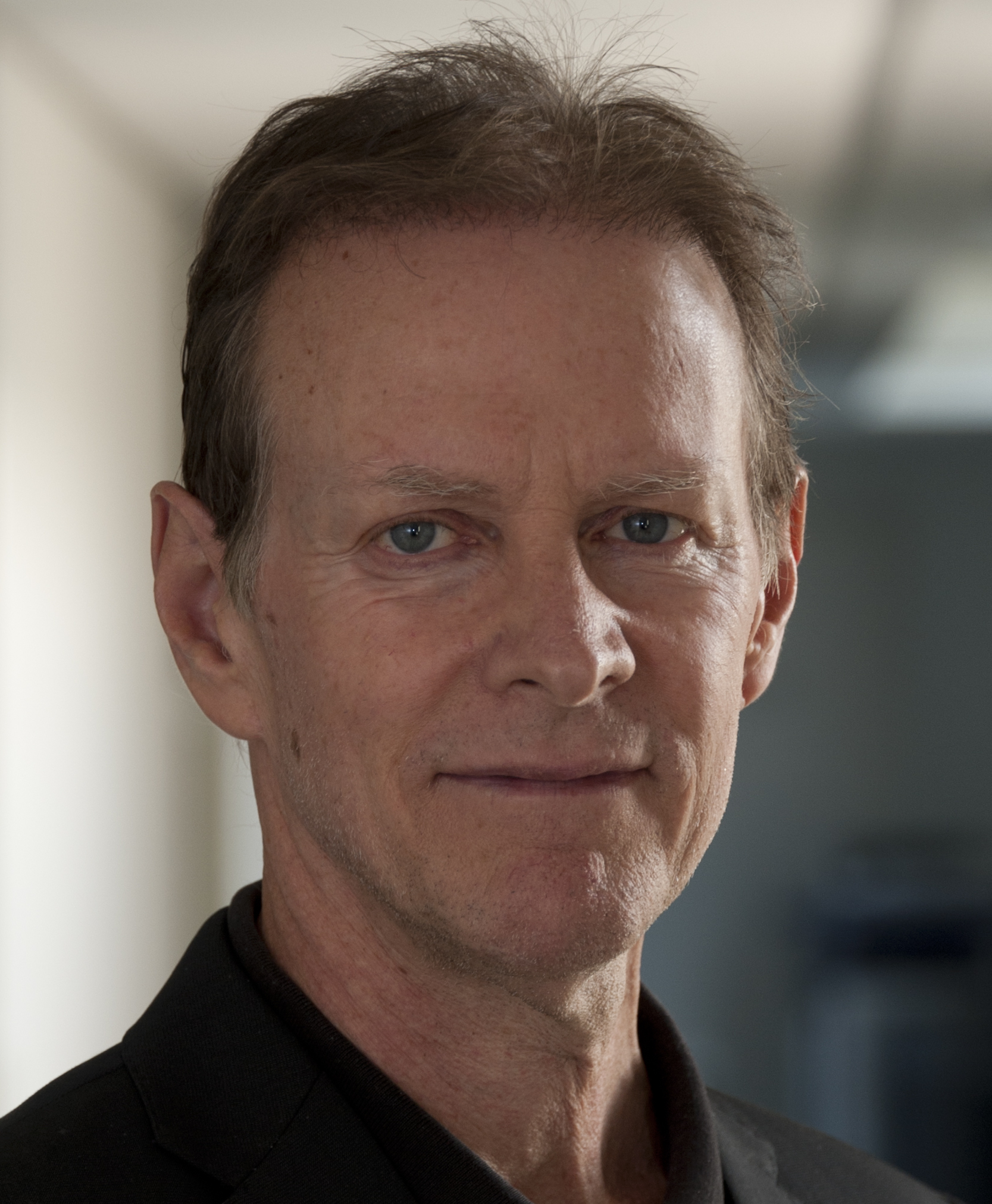
Patrick Valduriez, Senior Researcher, Inria, France
19 de dezembro (quarta), 11h, sala H-324B
Popularized by bitcoin and other digital currencies, the blockchain has the potential to revolutionize our economic and social systems. Blockchain was invented for bitcoin to solve the double spending problem of previous digital currencies without the need of a trusted, central authority. The original blockchain is a public, distributed ledger that can record and share transactions among a number of computers in a secure and permanent way. It is a complex distributed database infrastructure, combining several technologies such as P2P, data replication, consensus protocols and cryptography.
The term Blockchain 2.0 refers to new applications of the blockchain to go beyond transactions and enable exchange of assets without powerful intermediaries. Examples of applications are smart contracts, persistent digital ids, intellectual property rights, blogging, voting, reputation, etc. Blockchain 2.0 could dramatically cut down transaction costs, by automating operations and removing intermediaries. It could allow people to monetize their own information and creators of intellectual property to be properly compensated. The potential impact on society is huge, as excluded people could join freely the global economy.
In this talk, I will introduce Blockchain 2.0 technologies and applications, and discuss the opportunities and risks. In developing countries, for instance, the lack of existing infrastructure and regulation may be a chance to embrace the blockchain revolution and leapfrog traditional solutions. But there are also risks, related to regulation, security, privacy, or integration with existing practice, which must be well understood and addressed.
Patrick Valduriez is a senior scientist at Inria and LIRMM, University of Montpellier, France. He has also been a professor of computer science at University Pierre et Marie Curie (UPMC) in Paris and a researcher at Microelectronics and Computer Technology Corp. in Austin, Texas. He received his Ph. D. degree and Doctorat d'Etat in CS from UPMC in 1981 and 1985, respectively. He is the head of the Zenith team (between Inria and University of Montpellier, LIRMM) that focuses on data science, in particular data management in large-scale distributed and parallel systems and scientific data management. He has authored and co-authored many technical papers and several textbooks, among which "Principles of Distributed Database Systems". He currently serves as associate editor of several journals, including the VLDB Journal, Distributed and Parallel Databases, and Internet and Databases. He has served as PC chair of major conferences such as SIGMOD and VLDB. He was the general chair of SIGMOD04, EDBT08 and VLDB09. He obtained the best paper award at VLDB00. He was the recipient of the 1993 IBM scientific prize in Computer Science in France and the 2014 Innovation Award from Inria- French Academy of Science - Dassault Systems. He is an ACM Fellow.
